
BTL R-Force anti-gravity gait therapy
BTL R-Force anti-gravity gait therapy allows walking and load training with controlled body-weight support. The procedure helps restore movement more safely, gradually increase load and train gait quality during rehabilitation.
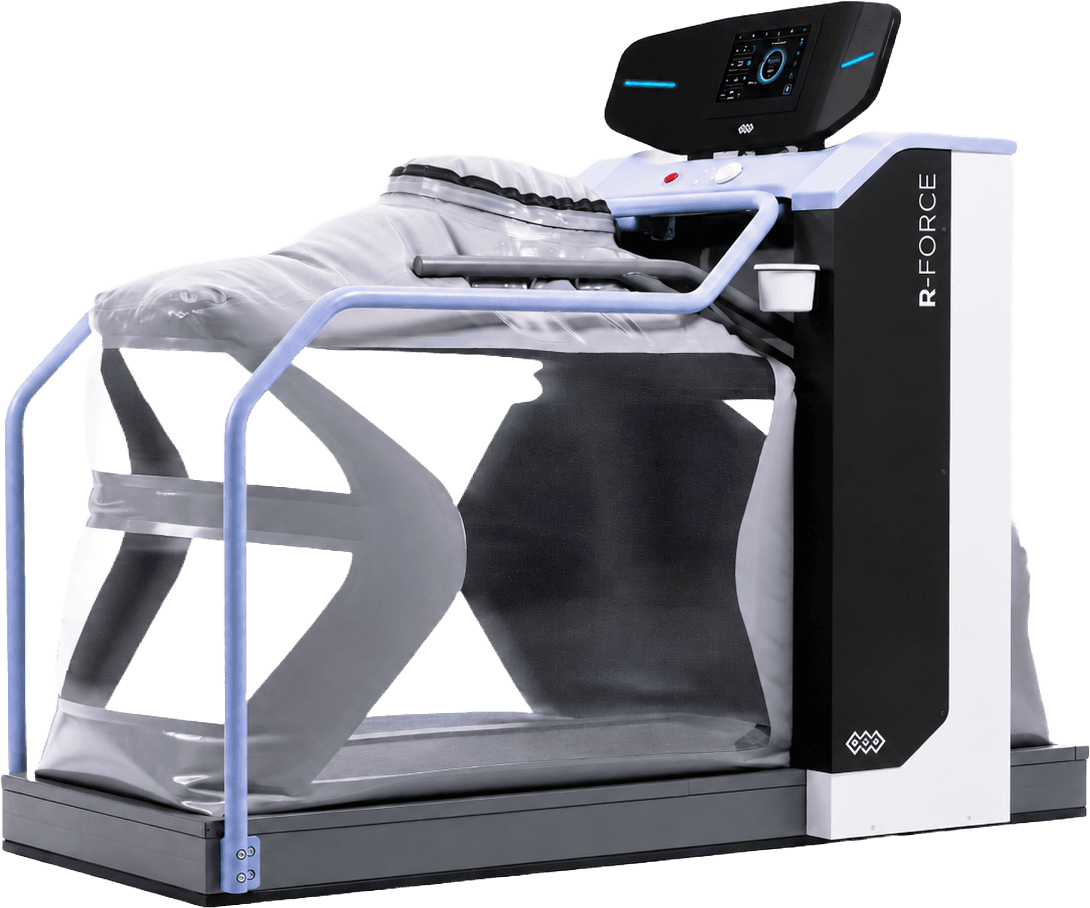
What is BTL R-Force therapy?
BTL R-Force uses a special pressure chamber that allows the patient’s body-weight load to be reduced during walking or running. This makes it possible to train movement with less load on the joints, spine and lower limbs.
This therapy may be useful when full weight-bearing is not yet safe or causes pain. The specialist adjusts the unloading level, speed, load and session duration according to the patient’s condition and rehabilitation goal.
Purpose of therapy
- Restore safer and higher-quality gait.
- Gradually increase load without excessive joint stress.
- Improve balance, coordination and movement control.
- Support return to everyday activities or sports load.
When may it be suitable?
- gait disorders or unstable walking
- rehabilitation after leg, knee, hip or ankle injuries
- recovery after lower-limb operations
- neurological movement disorders — after specialist assessment
- gradual return to running or load for athletes
- situations where full body-weight load causes pain or is not desirable
When is it not suitable or caution is needed?
- acute trauma without specialist assessment
- unstable blood pressure, marked dizziness or fainting risk
- conditions where physical load is not safe
- recent fractures or high fracture risk
- marked joint range limitations that prevent safe walking
- risk of thrombosis or recent thrombosis
- acute pain that increases during load
- situations where the patient cannot safely remain upright
Before the procedure, inform the specialist if you have:
How does the procedure work?
1. Assessment
The specialist discusses complaints, injury or surgery history, load tolerance and therapy goals.
2. Preparation
The patient is prepared for gait training. The device, body-weight support level and safe starting mode are adjusted.
3. Gait training
Walking or light running is performed with reduced body-weight load. The specialist monitors gait, posture and wellbeing.
4. Load progression
During therapy, the load can be gradually changed — reducing support, adjusting speed and session duration.
What should the patient know?
BTL R-Force therapy is not just “walking on a treadmill”. It is controlled gait and load therapy where correct dosage, specialist supervision and patient wellbeing are important. Dizziness, pain, shortness of breath or sudden weakness should not be ignored during the procedure.
Is BTL R-Force therapy suitable for you?
If you need gait recovery, safer load progression or gradual return to movement after injury, surgery or overload, book a visit. A specialist will help choose the most suitable mode.