
Ultrasound and phonophoresis
Ultrasound therapy is a physical therapy method where high-frequency mechanical vibrations are directed to the treatment area. In phonophoresis, ultrasound is used together with a topical therapeutic substance to support its local effect in tissues.
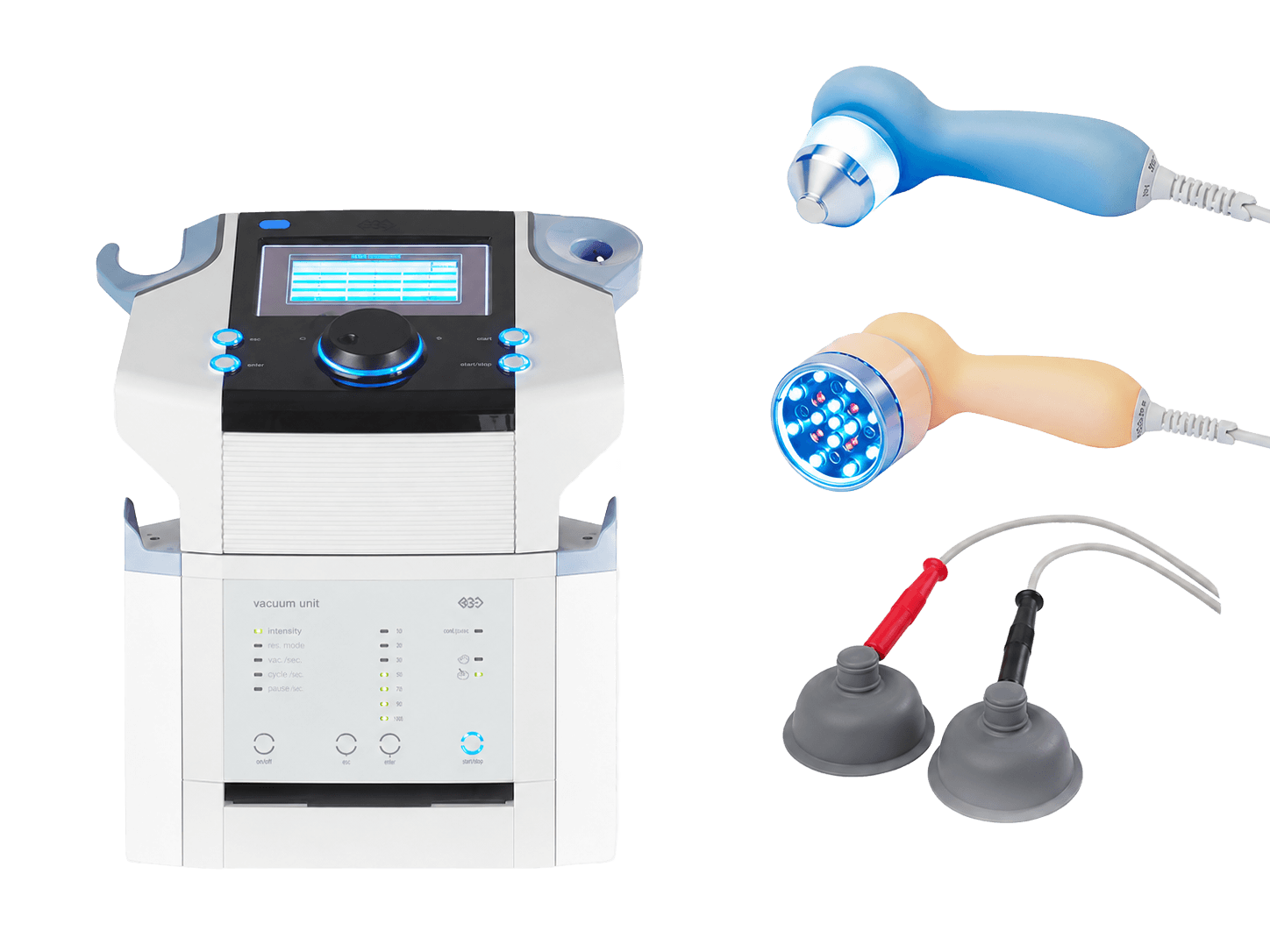
What are ultrasound therapy and phonophoresis?
Ultrasound therapy acts locally on soft tissues — muscles, tendons, ligaments and joint areas. Depending on the selected mode, the procedure may help reduce pain, tension and support tissue recovery.
Phonophoresis means that ultrasound is combined with a topical preparation, such as a gel or ointment. Before phonophoresis, the specialist checks whether the patient has allergies or contraindications to the specific substance.
Purpose of therapy
- Reduce local pain and muscle tension.
- Support soft tissue recovery.
- Improve local tissue metabolism and movement comfort.
- Complement rehabilitation for tendon, ligament, muscle and joint problems.
When may it be suitable?
- muscle tension and local pain
- tendon and ligament overload conditions
- joint area pain and movement limitations
- support of soft tissue recovery
- scar tissue and tissue elasticity improvement — after assessment
- chronic overload complaints
- phonophoresis — when local support of a topical preparation is needed
When is it not suitable or caution is needed?
- acute infection, fever or marked inflammation
- tumour or suspected tumour in the treatment area
- pregnancy — especially abdomen, pelvis or lower back area
- active bleeding or bleeding risk
- thrombosis or suspected thrombosis
- skin damage, wounds or marked irritation in the treatment area
- marked sensory impairment in the treatment area
- for phonophoresis — allergy or intolerance to the applied preparation
Before the procedure, inform the specialist if you have:
How does the procedure work?
1. Assessment
The specialist clarifies complaints, treatment area, contraindications and selects the appropriate ultrasound mode.
2. Preparation
The treatment area is freed from clothing. Contact gel or a suitable preparation for phonophoresis is applied to the skin.
3. Ultrasound application
The applicator is slowly moved over the treatment area. The procedure should not cause sharp pain or burning.
4. After the procedure
The specialist may recommend exercises, load management or a combination with other rehabilitation methods.
What should the patient know?
Ultrasound and phonophoresis are local procedures where the correct area, mode and safety assessment are important. In phonophoresis, it is especially important to inform the specialist about allergies and skin reactions to ointments, gels or medications.
Are ultrasound or phonophoresis suitable for you?
If you have local muscle, tendon, ligament or joint pain, tension or overload complaints, book a visit. A specialist will assess your condition and choose the safest procedure mode.